


Nanaimo is a car city almost everywhere, with one exception. The Old City Quarter is a few blocks of heritage buildings on a steep hill above the harbour, and it is the one part of town where daily life can happen on foot.
It is small, which is worth saying plainly. This is not a downtown in the sense that someone from Vancouver or Toronto means it. What it is instead is a genuine walkable pocket with independent shops, century-old buildings, and a coherent sense of place.
Here is what it is and who it suits.
What is the Old City Quarter?
The original commercial core of Nanaimo, sitting on the slope between Fitzwilliam and Wentworth streets, a short and fairly steep walk up from the waterfront. Most of the buildings date from the late 1800s and early 1900s, from the years when coal built this city.
It went through a revitalisation in the early 1980s, and the business association that runs it has been in place since the early 1990s. That continuity shows: the Quarter holds dozens of owner-operated shops and restaurants, plus a working layer of professional services, rather than the chain retail that fills most Canadian main streets.
The physical character is cobbled walkways, painted awnings, old stone, and mature maples over the street. Several buildings carry heritage plaques worth stopping to read.
What it is like to walk
Steep, which is the first thing to know. The Quarter climbs, and the walk up from the harbour is a steep hill rather than a gentle rise. That is part of the character and also a genuine consideration for anyone with mobility limits.
Beyond that it is compact and rewarding. Independent shops, cafes, restaurants, galleries, and specialty food, all within a few blocks, and enough variety that it works as an afternoon rather than an errand.
A few landmarks anchor it. The Occidental Hotel at Fitzwilliam and Selby, built in 1866 and recognised in Canada's Historic Places, is a Victorian Italianate building that still dominates its corner. St. Andrew's United Church at Fitzwilliam and Wesley dates from 1893. The old train station sits at the edge of the Quarter and now operates as a pub, which is a better fate than most heritage stations get.
The housing in and around it
The Quarter itself is commercial. The neighbourhood wrapping around it, the old city, is predominantly residential, and that is where people actually live.
What you find there is character housing: older homes on smaller lots, a mix of restorations and places that have not been touched in decades, and streets that were laid out long before anyone was thinking about parking. Some of the housing stock is genuinely old, with everything that implies both ways.
The trade-offs are the ones that come with any heritage neighbourhood. Older systems, smaller rooms, and less storage, against walkability, mature trees, and streets with a sense of history that new subdivisions cannot manufacture. People who want the Old City want it specifically, and rarely settle for an equivalent elsewhere.
Who it suits
- People coming from a walkable city. If you are used to living without driving everywhere, this is where that habit survives the move.
- Anyone who wants character over convenience. Old buildings, older streets, and a neighbourhood that has been there a long while.
- Downsizers who want to stay connected. Walking distance to shops, food, and the harbourfront removes the isolation that a quiet suburb can bring.
- Less suited to: anyone who needs level ground, wants a large modern home, or has to park several vehicles.
How it connects to the rest of the city
The Quarter sits a few minutes' walk from the harbourfront walkway, the foot ferry to Saysutshun and Protection Island, and Maffeo Sutton Park. That combination is the strongest argument for it: a walkable pocket that opens straight onto the water.
It also sits close to the Hullo terminal, which matters for anyone travelling to Vancouver regularly without a car. More on that in the guide to getting on and off the Island.
To compare areas side by side, see the Nanaimo Neighbourhood Guide, or read about the surrounding area on our Central Nanaimo page.
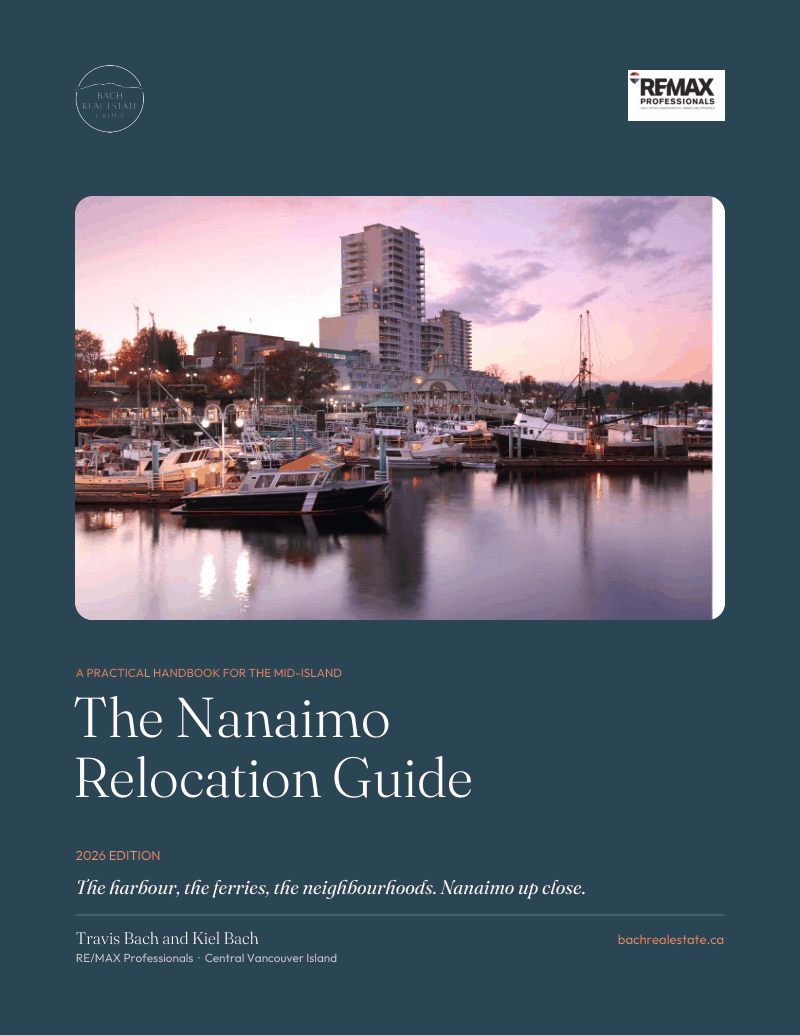
Click the guide below to download your copy.
 +5 more
All 6 guides, one sign-up
The full set covers the whole move, from the money to the neighbourhoods to settling in:
- Neighbourhood Guide
- Nanaimo 90-Day Checklist
- Equity & Cost of Living
- Health Care Guide
- Community Fit Guide
Frequently asked questions
Where is the Old City Quarter in Nanaimo?
On the slope between Fitzwilliam and Wentworth streets, a short and fairly steep walk up from the harbour. It is the original commercial core of the city, with most buildings dating from the late 1800s and early 1900s.
Is the Old City Quarter walkable?
Yes, and it is the most walkable part of Nanaimo. It is compact, with dozens of owner-operated shops, cafes, and restaurants within a few blocks. The one caveat is the hill: the Quarter climbs, and the walk up from the waterfront is steep enough to matter for anyone with mobility limits.
What is there to do in the Old City Quarter?
Independent shops, cafes, restaurants, galleries, and specialty food, all in a few blocks. Several buildings carry heritage plaques, including the Occidental Hotel at Fitzwilliam and Selby, built in 1866, and St. Andrew's United Church, from 1893. The old train station at the edge of the Quarter now operates as a pub.
Can you live in the Old City Quarter?
The Quarter itself is commercial. The old city neighbourhood surrounding it is predominantly residential and is where people live, with character housing on smaller lots and streets laid out long before cars. It suits people who want walkability and heritage character over space and convenience.
Is downtown Nanaimo a good place to live?
It depends what you want from a downtown. It is small, and not a downtown in the sense someone from a large city means. What it offers is a genuine walkable pocket with independent businesses, heritage buildings, and the harbourfront a few minutes away, which suits people coming from a walkable city more than it suits anyone wanting a large modern home.
Getting to know the area
The Old City is the one part of Nanaimo people either want specifically or not at all, so it is worth walking before deciding. The Moving to Nanaimo hub covers what living here is like across the board, the Nanaimo Neighbourhood Guide walks through the areas, and you can book a quick call with Travis or Kiel to talk it through.