


Nanaimo has more ways off the Island than anywhere else on it. Two vehicle ferry routes, a passenger fast ferry into downtown Vancouver, seaplanes from the harbour, and an airport with direct flights across western Canada.
That is the practical answer to the question everyone asks before moving here, which is whether being on an island makes life complicated. It does add a step. It does not add as much as people expect.
Here is every route and what each one is actually for.
What are the options for getting to Vancouver Island from Nanaimo?
Four, and they suit different trips:
- BC Ferries, with a vehicle. Two routes serve Nanaimo. Horseshoe Bay to Departure Bay takes roughly an hour and forty minutes and lands close to downtown Nanaimo. Tsawwassen to Duke Point takes about two hours and arrives south of the city.
- Hullo, on foot. A passenger and bike ferry connecting downtown Nanaimo to downtown Vancouver in roughly seventy minutes at sea. No vehicles.
- Seaplane. Harbour Air flies from the Nanaimo harbour to downtown Vancouver in around twenty minutes. Helijet also serves the route.
- Nanaimo Airport, YCD. South of the city, with direct flights to Vancouver and across to Alberta.
Which ferry route should you take?
It depends on your vehicle and which side of the mainland you are headed for.
Horseshoe Bay to Departure Bay is the shorter crossing and the better choice if you are going to the North Shore, Whistler, or the north side of Vancouver. Departure Bay is right in the city, with transit connections, so it also works on foot.
Tsawwassen to Duke Point is longer but often has easier parking and shorter vehicle queues, and it suits anyone heading south of Vancouver, to the airport, or to the US border. Duke Point sits south of Nanaimo and has no public transit connection, so it is a vehicle terminal in practice.
Booking has changed in recent years and continues to. Reservations are strongly recommended on all routes and required on some, so check BC Ferries directly rather than assuming you can drive up. In summer, book well ahead.
The car-free options
This is where Nanaimo genuinely differs from the rest of the Island.
Hullo runs from a terminal in downtown Nanaimo to downtown Vancouver, carrying foot passengers and bikes but no cars. It is the one route connecting two city centres directly, with reserved seating and no vehicle queue. For a meeting, a concert, or a weekend in Vancouver without a car, it is the obvious choice.
Seaplanes land in the harbour a few minutes' walk from downtown, which removes the ground travel at both ends. It costs more and weather delays it, but at around twenty minutes in the air it is the fastest link there is.
Plenty of people here use a combination: drive when the trip needs a car, and go on foot when it does not.
Flying from Nanaimo
Nanaimo Airport sits south of the city and carries direct service to Vancouver and to Alberta, which is what makes the move workable for people with family in Calgary or Edmonton. It is a small airport, which means short queues and a walk to the aircraft rather than a terminal trek.
For anything beyond western Canada, most people connect through Vancouver, or drive south to Victoria, which has the widest range of flights on the Island.
What changes in summer
Everything gets busier and planning matters more.
- Book ahead. Vehicle sailings fill, particularly around long weekends, and a missed reservation can mean waiting for the next one.
- Allow more time at the terminal. Check-in windows close well before departure, and they are enforced.
- Consider the other route. When Horseshoe Bay is jammed, Duke Point is often moving.
- Weather is a factor year round. Sailings can be cancelled with little notice, and seaplanes are more weather-sensitive again. Check conditions before leaving.
What this means if you live here
The real version is that the crossing shapes how you plan rather than whether you go. Trips to the mainland become deliberate: you go for a day or a few days rather than popping over. Most people find they cross less often than they expected and mind it less than they feared.
What matters more is which terminal you live near. Departure Bay and the north end put the shorter crossing and the Hullo terminal within a few minutes. The south end sits closer to Duke Point and the airport. It is a small thing until you are doing it monthly.
To compare areas side by side, see the Nanaimo Neighbourhood Guide.
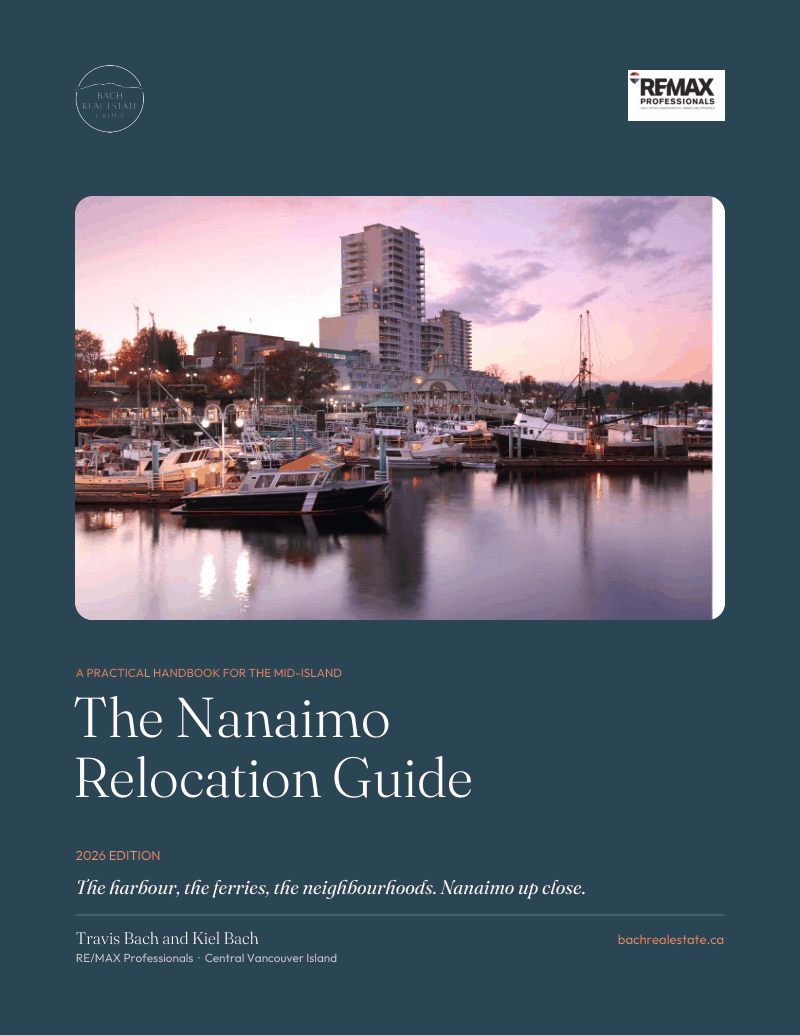
Click the guide below to download your copy.
 +5 more
All 6 guides, one sign-up
The full set covers the whole move, from the money to the neighbourhoods to settling in:
- Neighbourhood Guide
- Nanaimo 90-Day Checklist
- Equity & Cost of Living
- Health Care Guide
- Community Fit Guide
Frequently asked questions
How long is the ferry from Vancouver to Nanaimo?
It depends on the route. Horseshoe Bay to Departure Bay takes roughly an hour and forty minutes. Tsawwassen to Duke Point takes about two hours. The Hullo passenger ferry covers downtown Vancouver to downtown Nanaimo in roughly seventy minutes at sea, though scheduled times are a little longer to allow for harbour manoeuvring.
Can you get to Nanaimo from Vancouver without a car?
Yes, easily. Hullo runs a passenger and bike ferry between the two downtowns. Seaplanes land in Nanaimo harbour a few minutes from downtown, at around twenty minutes in the air. You can also walk onto a BC Ferries sailing at Horseshoe Bay and connect by transit at Departure Bay.
Which Nanaimo ferry terminal should I use?
Departure Bay if you are heading for the North Shore, Whistler, or the north side of Vancouver, since the crossing is shorter and the terminal is in the city with transit connections. Duke Point if you are heading south of Vancouver, to the airport, or to the border. Duke Point has no public transit connection.
Do you need a reservation for the ferry to Nanaimo?
Reservations are strongly recommended on all routes and required on some, and the rules have changed more than once in recent years. Check BC Ferries directly rather than assuming drive-up space will be available, and book well ahead in summer and around long weekends.
Does Nanaimo have an airport?
Yes. Nanaimo Airport sits south of the city and carries direct service to Vancouver and to Alberta, which is what keeps the move practical for people with family in Calgary or Edmonton. For destinations beyond western Canada, most people connect through Vancouver.
Getting to know the area
How often you expect to cross should shape which part of the city you look at. The Moving to Nanaimo hub covers what living here is like across the board, the Nanaimo Neighbourhood Guide walks through the areas, and you can book a quick call with Travis or Kiel to talk it through.